About us
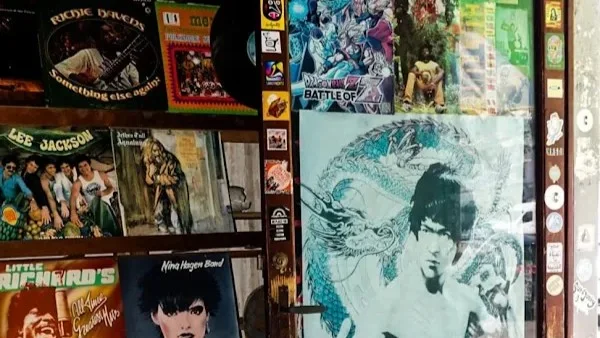
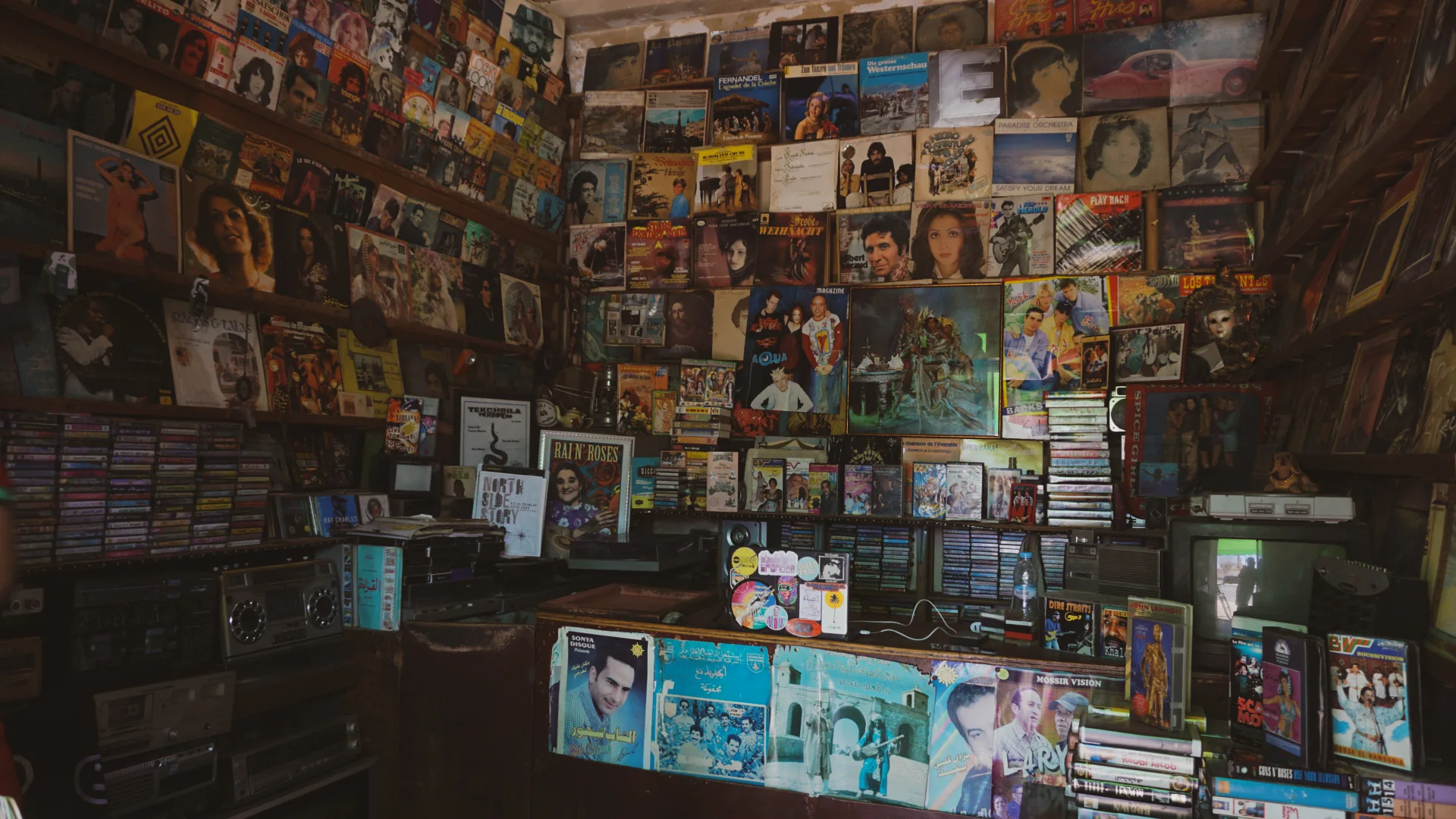
In southwest Morocco, on the coast of the Atlantic Ocean, the city of Agadir hums – but not with the usual noise. As you walk down Rue de la Marrakech, past the sputter of motorbikes and market vendors’ calling out over each other, the sound sharpens. Its source is a small storefront tucked between a row of ATMs and an inconspicuous doctor’s office. The hum is music, softly blaring out of the windows of Records Zaman – a space whose name is a testament to both its historic roots and the vintage music preserved inside.
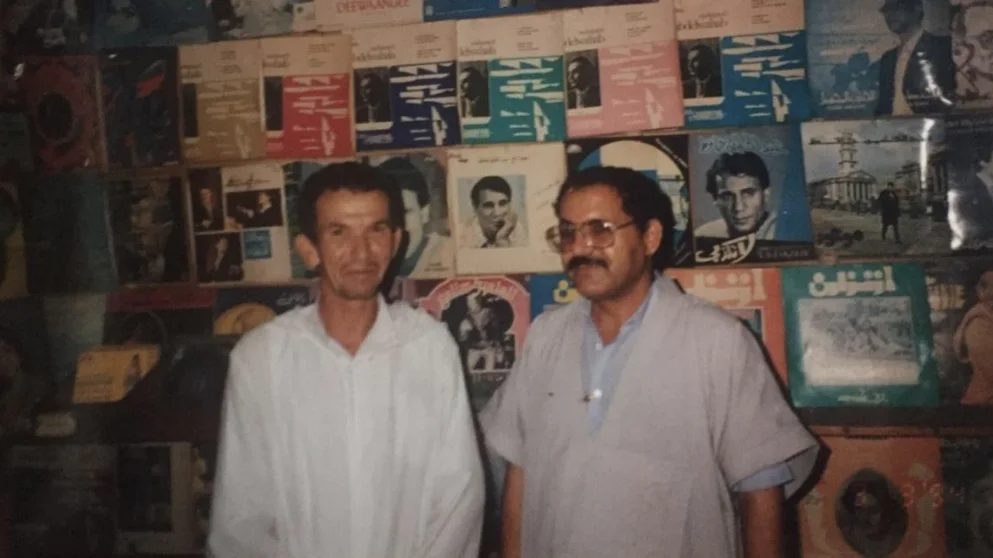
Every corner of the store is packed, wall to wall, with vinyl records, cassette tapes, and CDs – some aged and fraying at the edges, others still gleaming under the filtered light trickling through shaded windows. From Jimi Hendrix and Madonna to Oudaden – a traditional Amazigh band formed in nearby Ben Sergao in the 70’s – the collection spans continents and decades. With such a varied catalogue, it’s clear that this shop is a collector’s sanctuary, a living archive.
The evolution of Moroccan music spirals through time and across geographies, shaped by history and resistance. Guedra, named after a drum made from earthen pots and hides, emerged from the nomadic Tuareg tribes of the Sahara. Chaabi – meaning ‘popular’ or ‘of the people’ – echoes across Morocco, Algeria and Egypt, rooted in Andalusi poetic traditions and marked by reflections on love, labour, religion or even coffee. These verses are often accompanied by instruments like the mandol or tambour, weaving the intimacy of their lyrics into public performance.
Then there’s Gnawa – mystical, trance-inducing music brought to Morocco by West African Hausa and Fulani communities between the 16th and 17th centuries. With ceremonious traditions being deeply ingrained into the practice of this music, the ritual follows a routine of song, dance, burning incense and using specific colours and costumes.
But much of this sonic memory is hard to find today. Lost to the digital void, a rarity on major streaming platforms or forgotten in time. Without intentional preservation, these sounds are at risk of fading into obscurity. That’s where Records Zaman steps in.
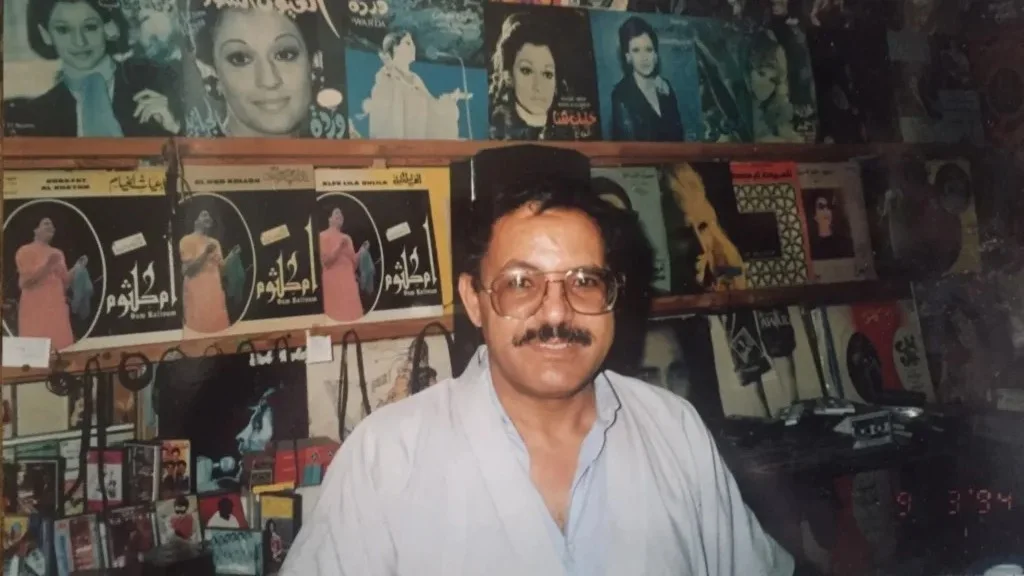
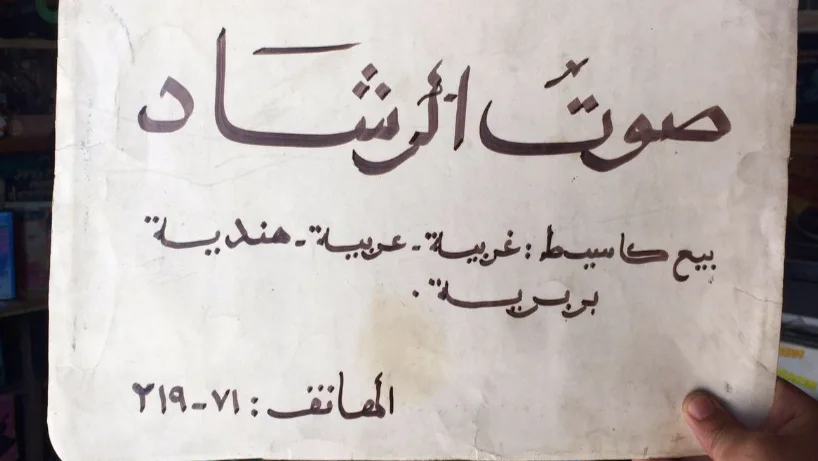
First opened in 1967 by Mr. Ahmed Aqdim under the name ‘Sawt Al-Rashad’, the shop originally sold books and school supplies before shifting its focus to Moroccan and African music. It later became one of the first stores in Agadir to sell vinyl and cassettes. After Mr. Aqdim’s passing in 2017, his son Amine Aqdim took over the business and rebranded it as Records Zaman – expanding its merchandise to include turntables, T-shirts, VHS tapes, and more. With receipts dating back to the 70s, the store has existed as a destination for both local and international music enthusiasts for decades.
In addition to digitising and classifying Moroccan music, Amine Aqdim is also a DJ, regularly collaborating with the French collective Radio Flouka to spotlight the diversity of Moroccan music from the 1950s to the present day.
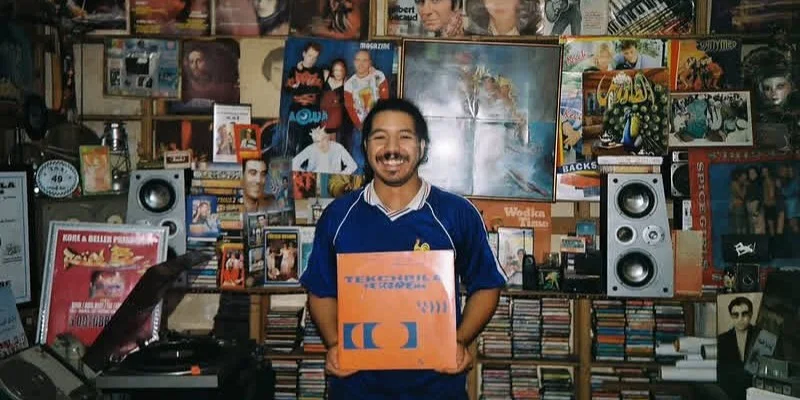
Records Zaman and Amine Aqdim have been featured by a growing number of international and regional media platforms that recognize the store as one of Morocco’s most important independent music archives. Among the most notable media outlets are Dazed MENA, which described Records Zaman as a “sonic archive” preserving Morocco’s forgotten sounds, and RFI (Radio France Internationale), which dedicated a full radio and written report to the history of the shop and Amine Aqdim’s work digitizing rare Moroccan and North African music. The store was also highlighted by Brut Afrique in a video documentary portraying the shop as a “museum of records” in Agadir. In addition, MILLE WORLD included Records Zaman in its selection of the best record stores in the MENA region for vinyl lovers. The project has also been connected to platforms such as Radio Flouka, where Amine Aqdim shares rare Moroccan and North African musical archives through DJ sets and curated selections. Through these media appearances, Records Zaman has become internationally recognized as both a cultural archive and a symbol of Morocco’s musical memory, attracting collectors, researchers, DJs, and music lovers from around the world.